In this article
Vibration plates have gone from gym curiosity to one of the most popular bits of home fitness kit in the UK. Scroll through Amazon and you’ll find hundreds of them, from no-name budget boards to commercial-grade machines used by physios and elite sports teams. Most look almost identical in photos. They aren’t.
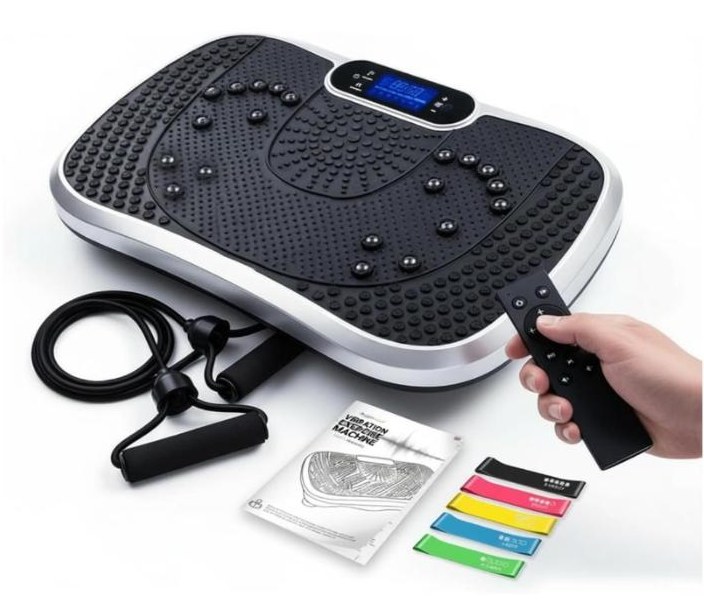
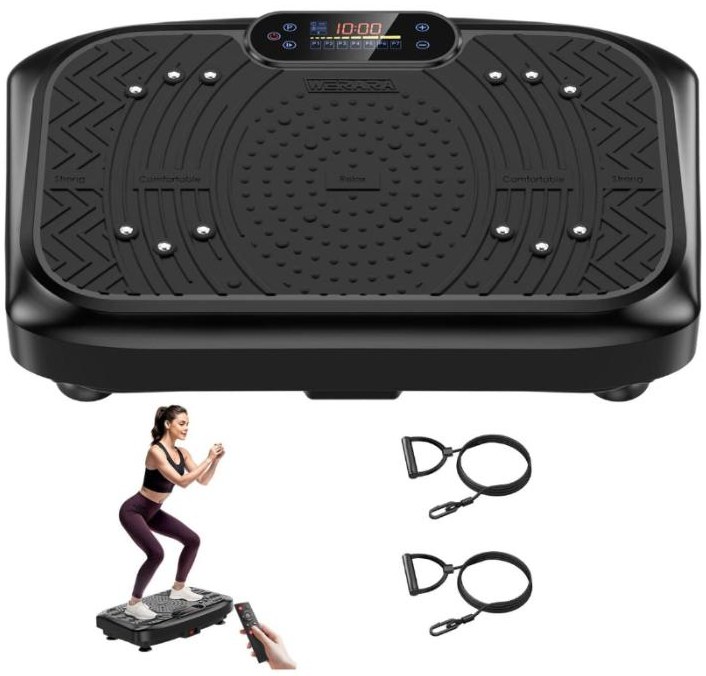
We’ve spent years following this market, and for this guide we went back through every plate worth considering in 2026. We compared manufacturer specifications, dug through verified UK owner reviews to spot patterns in reliability, noise and after-sales support, and checked the claims on each box against what the research actually shows. Below you’ll find the plates we’d buy, who each one suits, and what to watch out for before you spend a penny.
The short version
- Best for most people: the LifePro Waver. It’s well built, quiet, easy to store and backed by one of the largest bodies of UK owner feedback of any plate.
- Best on a tight budget: the EVOLAND sits at the bottom of the £ Budget band and does the basics surprisingly well.
- Best if you want something to hold on to: the Bluefin Pro, an upright plate with full-height handlebars.
- Best if money’s no object: the Power Plate MOVE, the machine many gyms and clinics use.
- No plate will melt fat on its own. Used alongside simple exercises, they can help leg strength and balance, especially as you get older. Here’s what the research says.
Our top picks at a glance
Our picks in the order we recommend them, each with its overall score out of five. Tap a name to read the full review.
- Best overallLifePro Waver4.5/5Outstanding
- Best budgetEVOLAND Vibration Plate4.0/5Very good
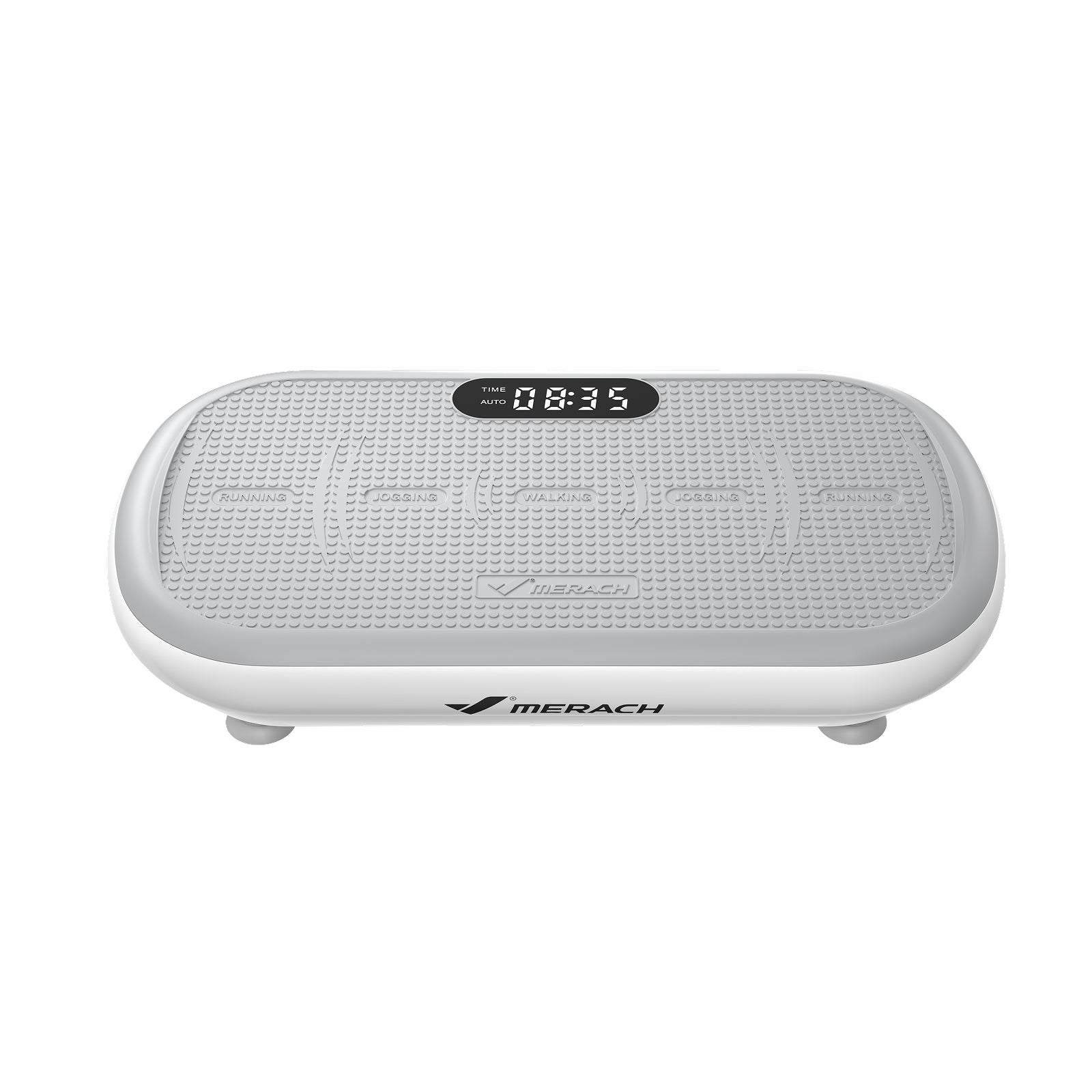
- Best for small spacesMERACH CV30 Pro4.1/5Very good
- Best with handlebarsBluefin Pro4.3/5Very good
- Best for varietyBluefin 4D4.2/5Very good
- Best premiumPower Plate MOVE4.4/5Very goodNot sold on Amazon UK. Available direct from Power Plate and other UK retailers.
- Best premium compactPersonal Power Plate4.0/5Very goodNot sold on Amazon UK. Available direct from Power Plate and other UK retailers.
How our picks compare
Every pick side by side, using the specs each manufacturer publishes. On a phone, swipe the table sideways to see every column. We show price bands rather than exact prices, because prices change week to week. The bands are explained in how we review.
| Plate | Score | Price band | Motion | Frequency | Max user | Size | Where to buy |
|---|---|---|---|---|---|---|---|
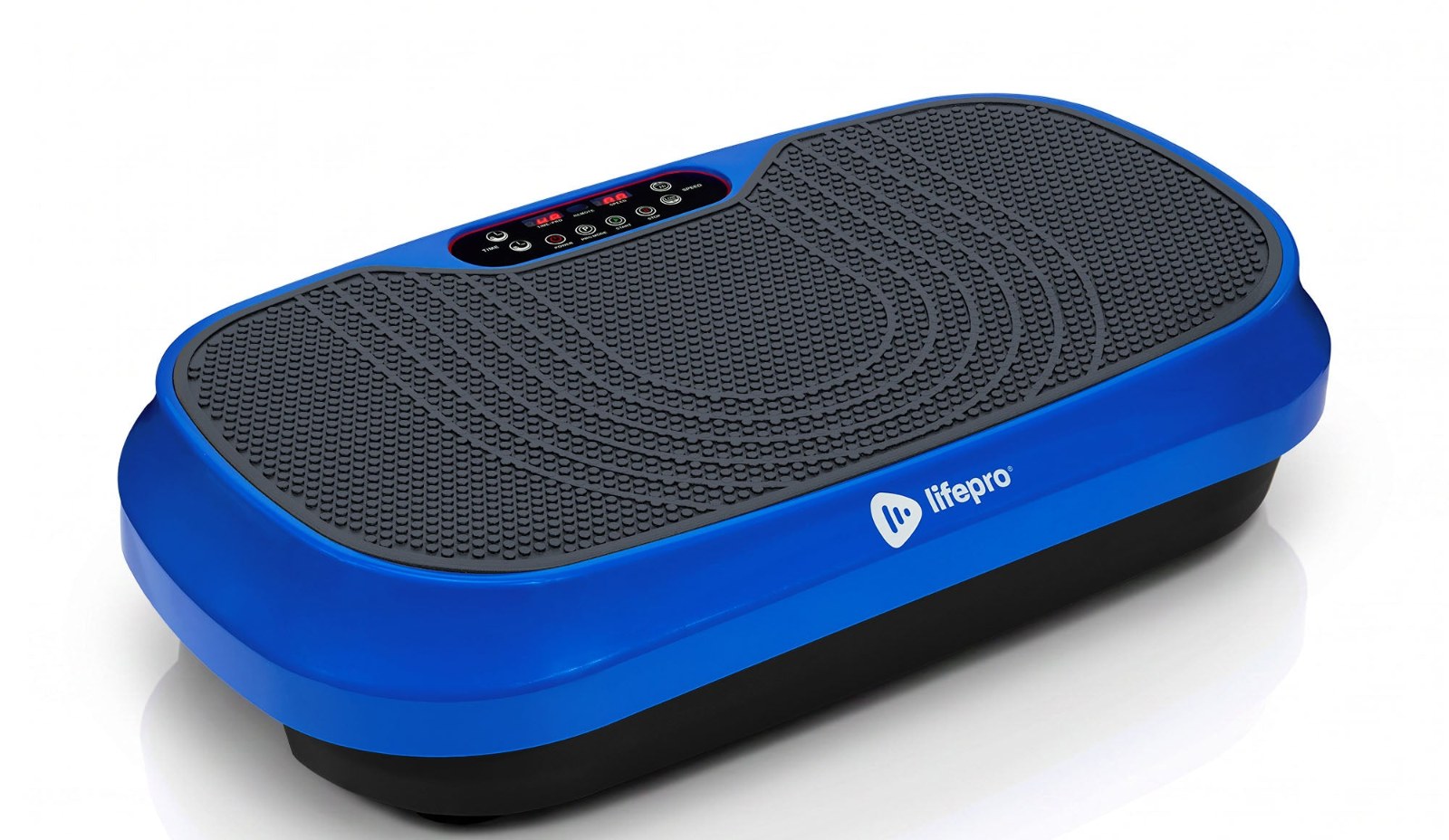
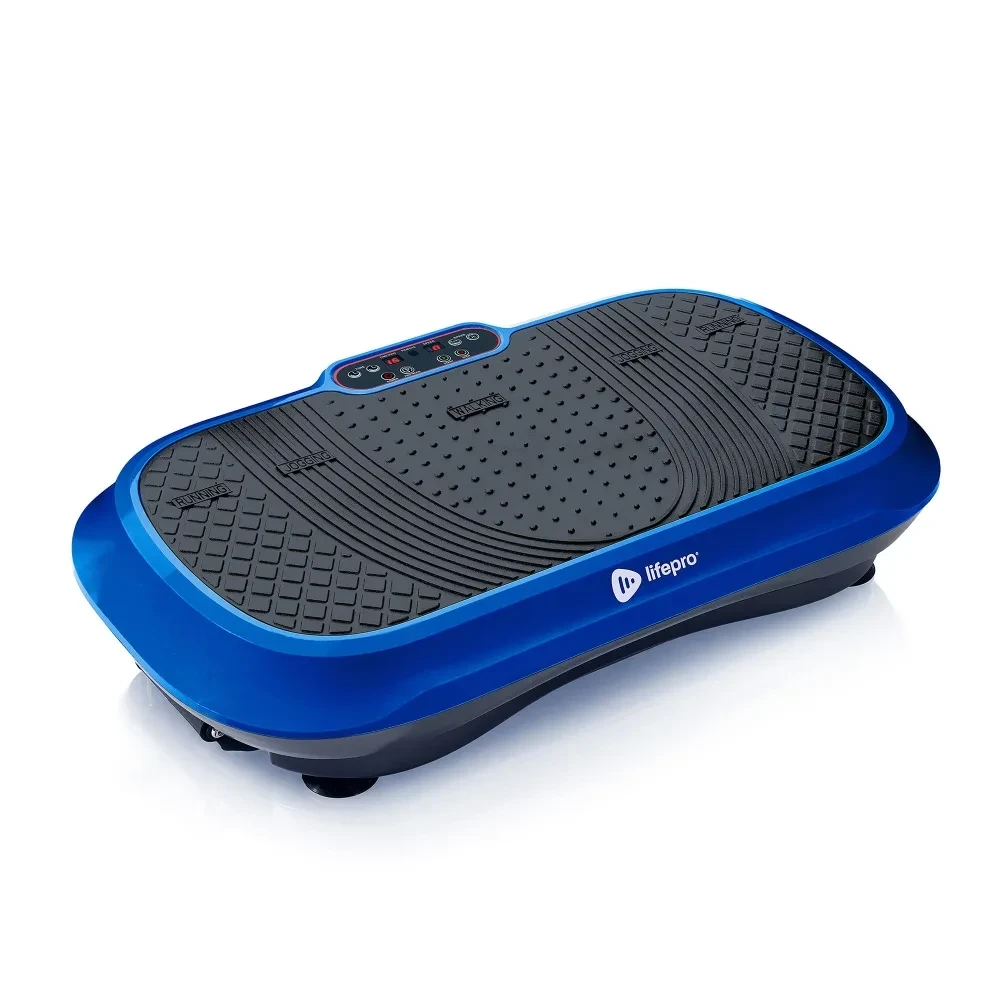 LifePro WaverBest overall | 4.5/5Outstanding | ££ Entry | Oscillating | Not published | 150kg | 70 x 41 x 14cm | Check price on Amazon UK for the LifePro Waver (opens in a new tab) |
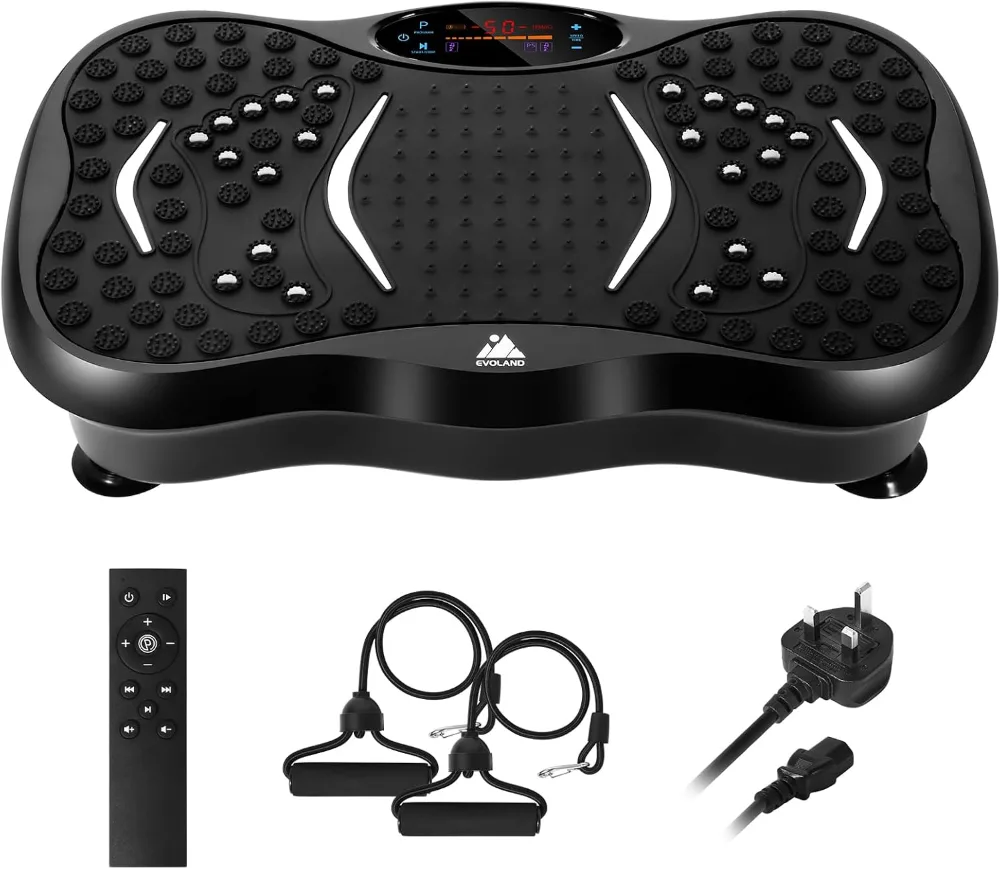 EVOLAND Vibration PlateBest budget | 4.0/5Very good | £ Budget | Oscillating | Not published | 136kg | 54 x 32 x 13.5cm | Check price on Amazon UK for the EVOLAND Vibration Plate (opens in a new tab) |
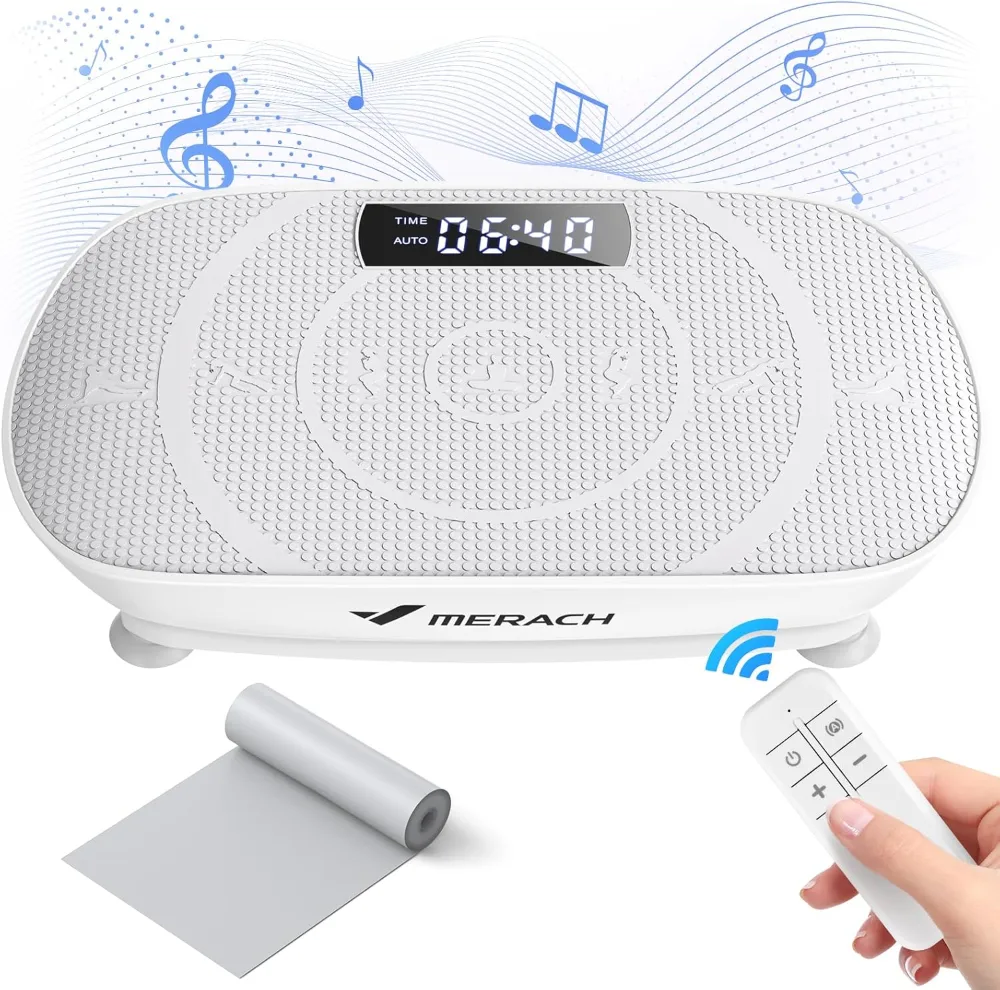 MERACH CV30 ProBest for small spaces | 4.1/5Very good | £ Budget | Oscillating | Not published | 136kg | 58 x 33 x 12cm | Check price on Amazon UK for the MERACH CV30 Pro (opens in a new tab) |
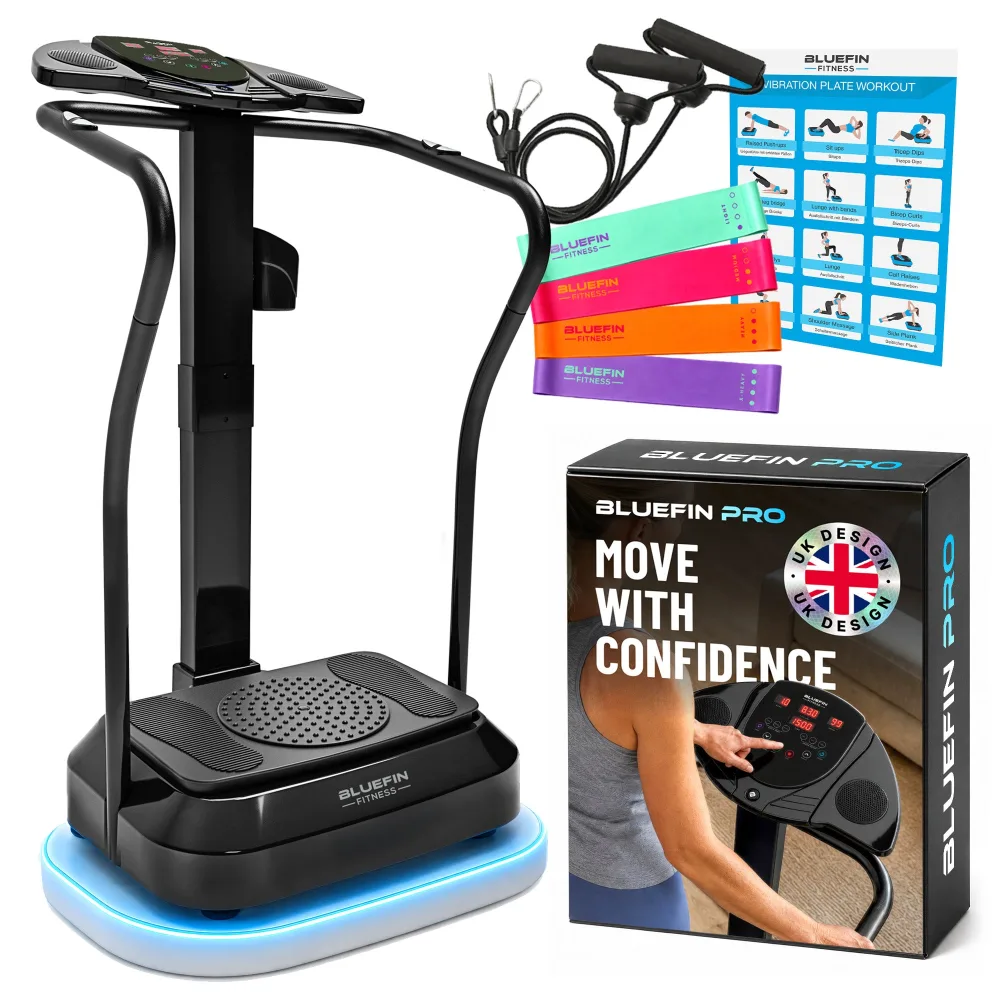 Bluefin ProBest with handlebars | 4.3/5Very good | £££ Mid | Vertical, upright | 4 to 10.7Hz | Not stated | 71 x 67 x 116cm | Check price on Amazon UK for the Bluefin Pro (opens in a new tab) |
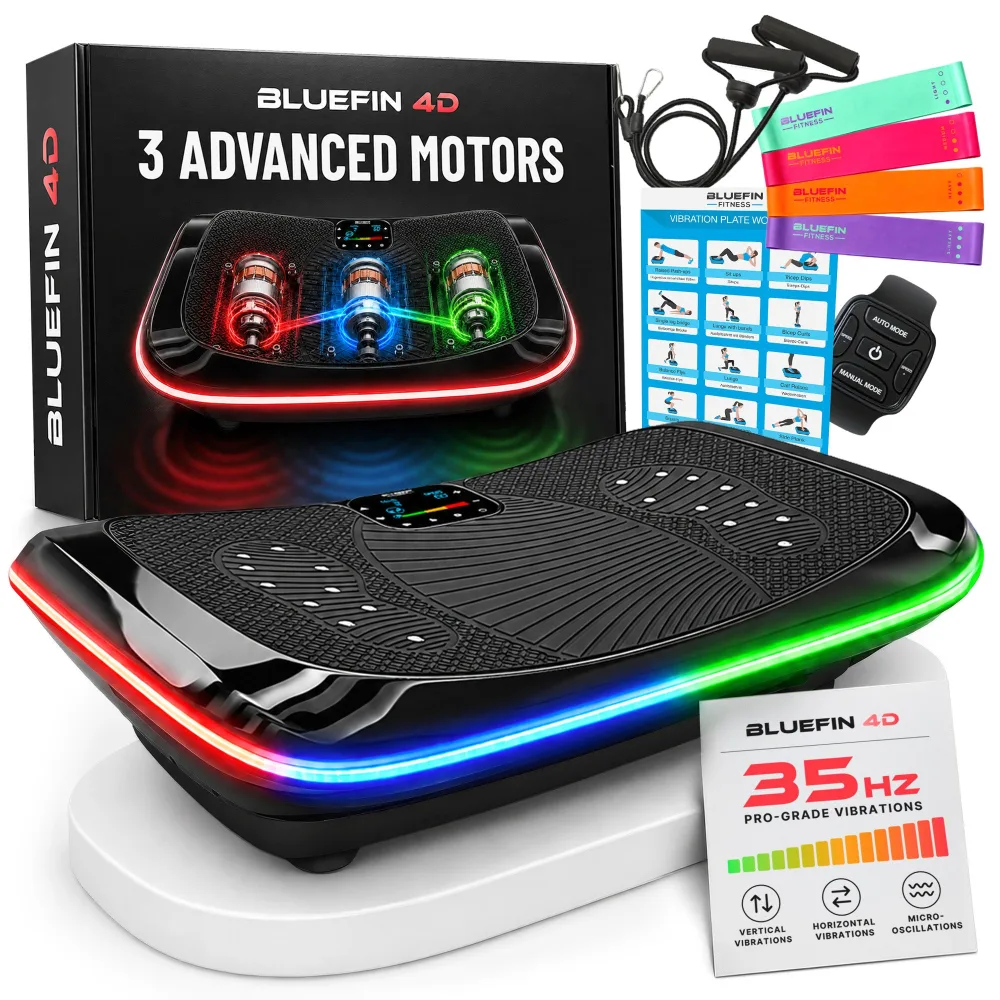 Bluefin 4DBest for variety | 4.2/5Very good | £££ Mid | Three motors: vertical, oscillating, micro | Up to 34.6Hz | 150kg | 79 x 46 x 21cm | Check price on Amazon UK for the Bluefin 4D (opens in a new tab) |
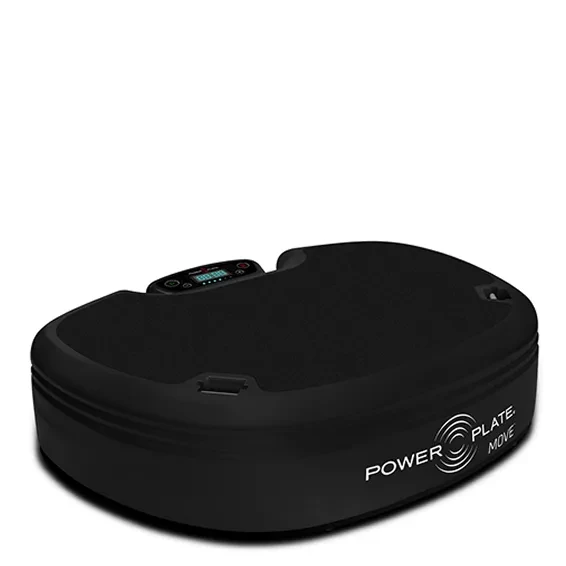 Power Plate MOVEBest premium | 4.4/5Very good | ££££ Premium | Mainly vertical | 30 to 40Hz | 136kg | 76 x 60cm platform | Not sold on Amazon UK. Available direct from Power Plate and other UK retailers. |
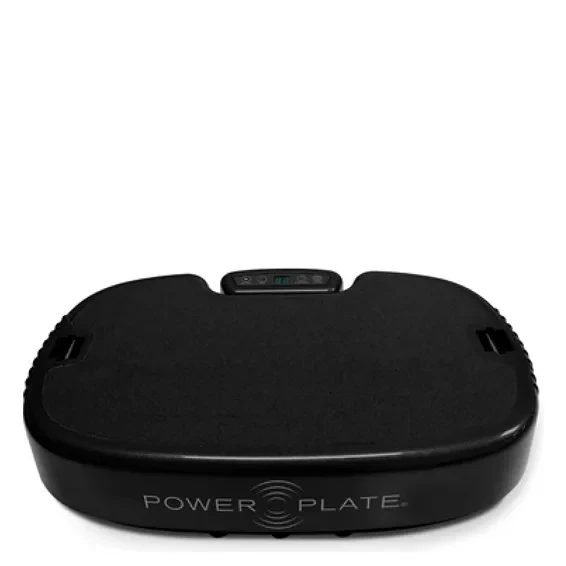 Personal Power PlateBest premium compact | 4.0/5Very good | ££££ Premium | Mainly vertical | Fixed 35Hz | 120kg | 70 x 47.5 x 15.7cm | Not sold on Amazon UK. Available direct from Power Plate and other UK retailers. |
The best vibration plates in detail
1. LifePro Waver
4.5/5
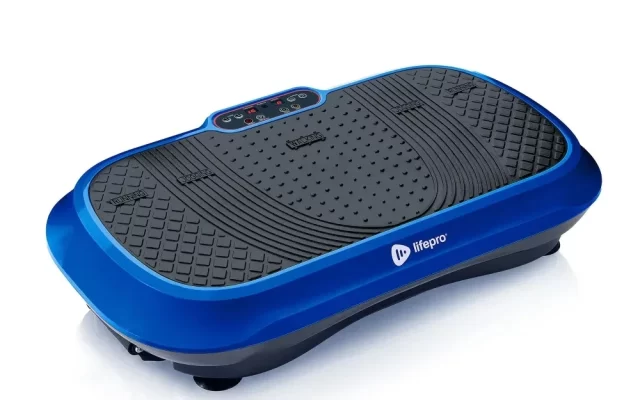
If you just want a good plate that works, this is the one we’d point you to. The Waver is a side-to-side (oscillating) plate, which gives that familiar see-saw feeling through your legs. It has 99 speed settings, so you can start very gently and build up, and it ships with four resistance bands, two loop bands and a remote.
What sets it apart is the sheer weight of owner feedback. It’s one of the most widely owned plates in the UK, and the patterns in owner feedback are reassuring. Owners regularly mention that it’s quiet enough to use while someone sleeps upstairs, and long-term reviewers report using it daily for a year or more without problems. At 14cm tall it slides under most sofas and beds.
Reasons to buy
- Huge, consistently positive owner base
- Fine-grained speed control suits beginners
- Generous accessories in the box
- Slim enough to store under furniture
Reasons to avoid
- Oscillation only, so no vertical mode
- Lighter than premium plates, so it can shuffle on hard floors
Check price on Amazon UK Read our full review
2. EVOLAND Vibration Plate
4.0/5
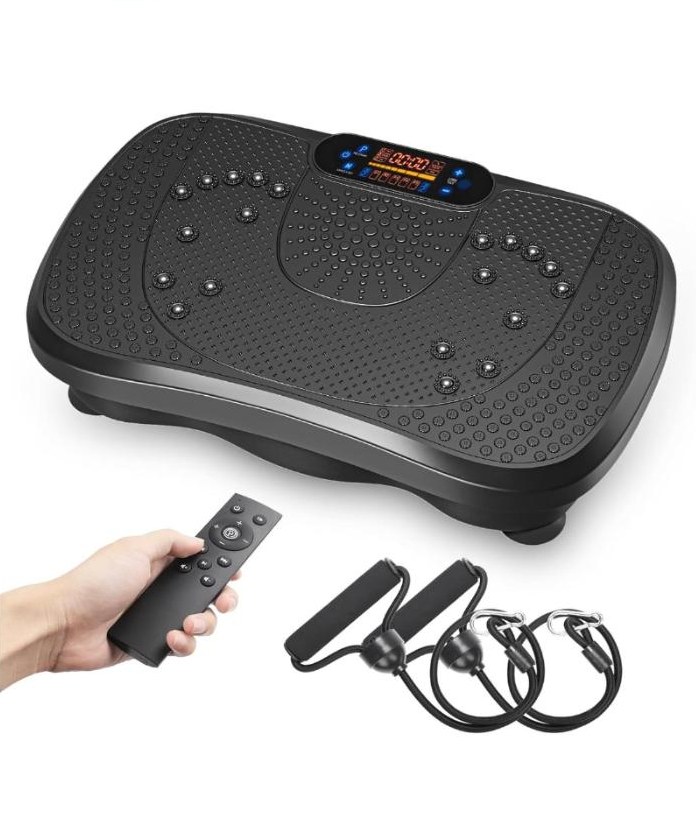
You don’t need to spend much to find out whether vibration training is for you. The EVOLAND costs about the same as a month’s gym membership and covers the essentials: 99 manual speeds, five automatic programmes, a remote, two resistance bands and a Bluetooth speaker so you can play music from your phone.
It’s small and light at 7.4kg, which makes it easy to move between rooms. Recent UK owners describe it as sturdy for the price. The usual budget compromises apply. The power lead is short, the platform is compact if you have big feet, and the claimed “up to 12mm amplitude” isn’t something the maker backs up with independent figures.
Reasons to buy
- Very low price for what you get
- Light and easy to carry
- Bluetooth speaker and remote included
Reasons to avoid
- Small platform limits wide-stance moves
- Short power cable
- Amplitude claim isn’t independently verified
Check price on Amazon UK Read our full review
3. MERACH CV30 Pro
4.1/5
The CV30 Pro is one of the neatest-looking plates on sale and one of the most compact, at 58cm wide and just 12cm tall. Its soft silicone top is comfortable under bare feet, and four suction-cup feet help keep it planted, which matters on laminate or wooden floors.
It has only 10 speed levels, far fewer than the “99” or “180” quoted on rival boxes. In practice that’s no great loss, because those huge numbers are mostly tiny steps between the same handful of real intensities. UK owners praise how quiet and easy it is. If you’re tall or like wide squats, though, the small platform will feel cramped.
Reasons to buy
- Very compact and easy to store
- Comfortable, grippy silicone surface
- Quiet, according to owners
Reasons to avoid
- Small platform for wide stances
- Only 10 intensity steps
- Thin instructions
Check price on Amazon UK Read our full review
4. Bluefin Pro
4.3/5
If balance is a worry, or you simply like having something to hold, a plate with a column and handlebars makes a real difference. The Bluefin Pro is the best-value upright model we’ve found from an established UK brand. The bars give you support for gentle standing sessions and something to grip for squats and calf raises.
Bluefin says the motor runs below 55dB, roughly the level of a quiet conversation, and backs it with a lifetime motor warranty, which is rare at this price. It also adds a spinning twist plate and a bottle holder. The trade-off is size. At 116cm tall it’s a piece of furniture, not something you’ll slide under the bed.
Reasons to buy
- Handlebars for support and confidence
- Lifetime motor warranty
- Quiet motor
Reasons to avoid
- Takes up floor space permanently
- Low frequency range compared with premium plates
Check price on Amazon UK (opens Amazon UK in a new tab) Read our full review
5. Bluefin 4D
4.2/5
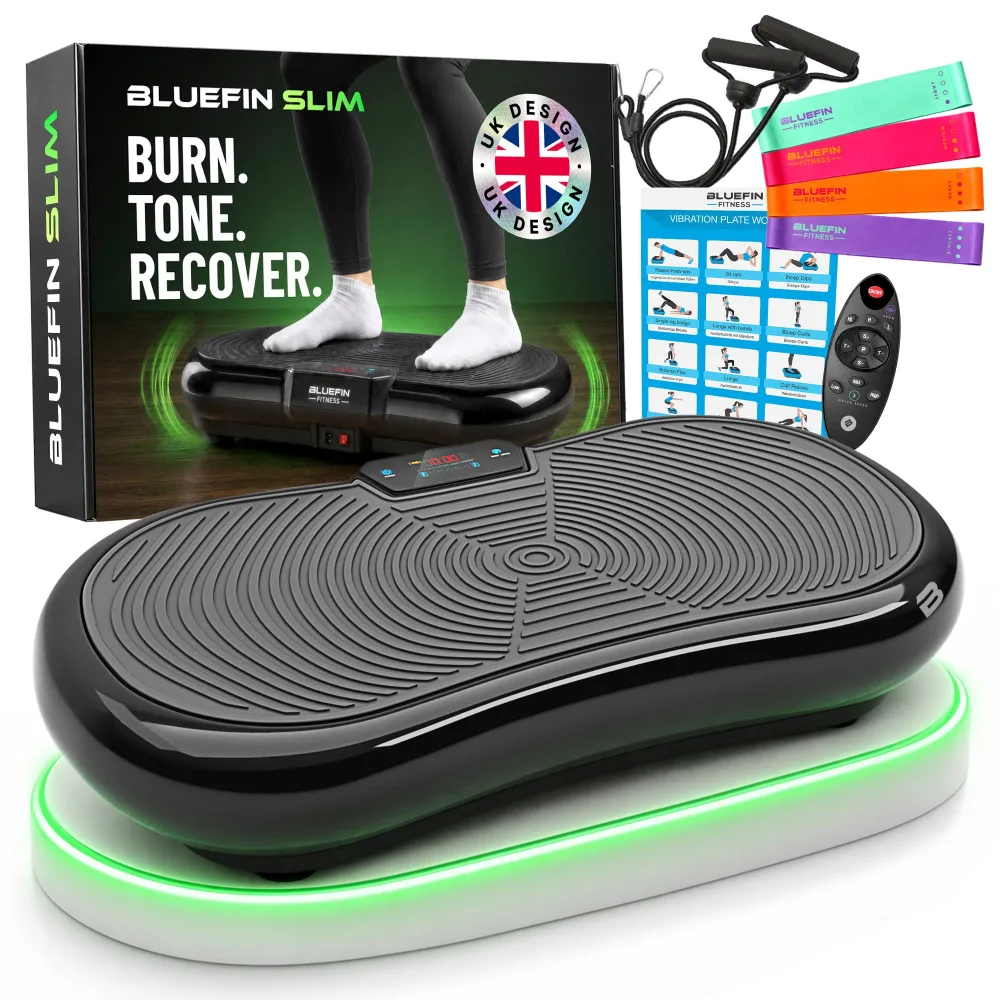
Most cheap plates do one thing. The 4D uses three separate motors to combine side-to-side oscillation, a vertical vibration and a fine “micro-vibration”, either one at a time or together. That gives you far more variety than a single-motion board, and its top frequency of 34.6Hz is much closer to what you’ll find on gym machines.
The platform is big and stable, there’s a Bluetooth speaker, and the remote straps to your wrist like a watch. Owners love the build quality and how solid it feels. The common complaints are a fiddly remote (you need to pull out a battery tab before it works), thin instructions and the 21kg weight with no wheels. A minority of reviewers report rattles after several months, so keep your receipt.
Reasons to buy
- Several motion types in one plate
- Higher top frequency than budget boards
- Large, stable platform
Reasons to avoid
- Heavy, with no handles or wheels
- Wrist remote is fiddly
- Some reports of rattles over time
Check price on Amazon UK Read our full review
6. Power Plate MOVE
4.4/5
Power Plate is the name most physios, personal trainers and sports scientists know, and the MOVE is its most sensible machine for the home. It runs at 30 to 40Hz, the range used in most of the published research, with a choice of low or high output at each level. That’s a very different, faster and finer buzz than the slow rocking of a budget board.
The platform is wide enough for lunges and simple jumps, the build is gym grade, and it comes with straps, a rubber mat and access to Power Plate’s library of guided workouts. There’s no column, so you’ll need decent balance, and at 39kg it isn’t something you’ll move daily. The price is the obvious hurdle. Its list price sits in our £££££ Commercial band, though UK retailers have discounted it into the ££££ Premium band.
Reasons to buy
- Research-grade frequency range
- Superb build quality
- Big, stable platform
Reasons to avoid
- Very expensive
- Heavy and no handlebars
Not sold on Amazon UK. Available direct from Power Plate and other UK retailers. Read our full review
7. Personal Power Plate
4.0/5
The Personal gives you Power Plate’s motion in a body that weighs 16.5kg and fits under a bed. It comes with a soft carry case, so it’s the plate we’d choose if you want premium quality and need to pack it away every day or take it on holiday.
The catch is that it runs at a single frequency, 35Hz, with just low and high settings and a 30 or 60 second timer. That’s plenty for most home routines, but you’re paying a lot for a narrow range, and the one-year warranty is short at this price. Unless storage really matters, the MOVE is the better long-term buy.
Reasons to buy
- Premium motion in a portable body
- Comes with a carry case
Reasons to avoid
- Only one frequency
- One-year warranty
- Lower 120kg weight limit
Not sold on Amazon UK. Available direct from Power Plate and other UK retailers. Read our full review
Also worth considering
- Hypervibe G17 Pro (£££££ Commercial): a heavy-duty upright machine with a 7mm amplitude, a 9-inch touchscreen and a 200kg user limit. It’s aimed at clinics and serious home users who want maximum intensity.
- Bluefin Ultra Slim (££ Entry): a long-running UK bestseller. It’s compact and simple, but its 6 to 12Hz range is modest and some owners report problems after a couple of years.
- Bluefin Ultra Slim Plus (££ Entry): the same idea as the Ultra Slim with detachable handles for upper-body work.
How we choose the best vibration plates
Every plate on this page earns its place on the same five things: the type and quality of the motion, how much control you get over speed and intensity, build quality and safety limits, how easy it is to live with day to day, and value for money. We weigh the manufacturer’s specifications against what verified UK owners report after months of use, because a spec sheet won’t tell you whether a motor starts rattling after a year or whether the remote is fiddly.
We also read the research, so we can tell you honestly what a plate can and can’t do for you. No brand pays to be included, and our scores don’t change because of affiliate commission. You can read more about our process in how we review.
What to look for in a vibration plate
The type of motion
This is the single biggest choice. Oscillating (also called pivotal or side-alternating) plates rock like a see-saw, and they’re what most budget and mid-range home plates use. They feel natural, are kind to beginners and get blood moving in the legs. Vertical (linear) plates move straight up and down at higher frequencies, which is what Power Plate uses and what much of the research tests. Tri-planar and 3D or 4D plates combine motions to give you more variety. Our guide to the types of vibration plate explains each one with diagrams.
Frequency and amplitude
Frequency (Hz) is how many times the plate moves each second, and amplitude is how far it travels. Most home oscillating plates run at around 5 to 15Hz with a few millimetres of travel, while vertical machines run at 25 to 50Hz with a smaller movement. A plate that lists “180 levels” or “99 speeds” isn’t necessarily stronger than one with ten, so look at the actual frequency range.
Weight limit and size
Check the maximum user weight and give yourself some margin, since a plate running near its limit works harder. Measure the space where it’ll live too. Slim boards slide under a sofa, while upright machines need a permanent spot.
Noise, warranty and extras
If you live in a flat, look for owners’ comments on noise and use a mat. A two-year warranty, or a lifetime motor warranty like Bluefin’s Pro, is reassuring. Resistance bands, a remote and a timer are handy, but don’t pay much extra for app features you won’t use. Our full vibration plate buying guide goes into more detail.
Who shouldn’t use a vibration plate
Check with your GP first if any of these apply to you. Manufacturers and fitness bodies advise against using a vibration plate if you’re pregnant, have a pacemaker or other implanted device, have had a recent operation, have a joint replacement or metal implants, or live with epilepsy, deep vein thrombosis, serious heart disease, recent fractures, gallstones or kidney stones, or a detached retina.
That list isn’t meant to scare you. Plenty of people with arthritis or osteoporosis use plates under medical guidance, but it’s worth a conversation before you buy. Our guide to vibration plate safety covers each condition in more depth.
Do vibration plates actually work?
Yes, for some things, and the honest answer is more interesting than the adverts. Here’s what the research says.
- Weight loss: on their own, not really. A 2025 review of 20 trials found vibration training alone didn’t produce meaningful weight or fat loss. Combined with diet and other exercise, it may add a little.
- Balance and falls: this is where the evidence is most encouraging. Reviews in older adults show better balance and walking test scores, and one trial in nursing-home residents found about a third fewer falls.
- Leg strength: studies in older adults show modest gains in lower-body strength, especially when you exercise on the plate rather than just standing still.
- Bone density: the results are mixed. A 2026 review found small gains at the hip, while other reviews of women after the menopause found no clear benefit.
- Circulation: side-alternating plates increased blood flow in the legs in one study, while vertical plates didn’t.
The takeaway is that a vibration plate works best as a way to make simple exercises like squats and lunges a bit more effective and more enjoyable. It isn’t a replacement for walking, strength training or a balanced diet. We go through every study in do vibration plates work?
Vibration plate FAQs
How long should I use a vibration plate each day?
Start with 10 minutes, broken into short sets of 30 to 60 seconds with rests in between. Most research uses sessions of 10 to 20 minutes, three times a week. More isn’t better, and many plates have a 10 or 15 minute auto shut-off for that reason.
Is it better to stand still or exercise on the plate?
Exercise. Holding a squat, doing calf raises or slow lunges makes your muscles work much harder than standing upright with straight legs. Keep your knees soft, because locked knees send more vibration up to your head. Our vibration plate exercises page has a full beginner routine.
Can I use a vibration plate upstairs or in a flat?
Yes, but put it on a thick rubber mat to cut noise and protect the floor. Budget oscillating plates are generally fine. Very powerful machines can be loud, so think about the neighbours below.
Are cheap vibration plates any good?
Some are surprisingly good. The EVOLAND and MERACH plates above cost under £100 and suit beginners well. Where cheaper plates fall short is longevity, weight limits and precise control, which is why we rate the LifePro Waver as the best value overall.
Will a vibration plate help with cellulite or lymphatic drainage?
There’s very little good research on either. Better circulation in the legs might help you feel less puffy, but we’d be wary of any plate sold mainly on those promises.
Sources
- Gou et al. (2025). Whole-body vibration training and body composition: a systematic review and meta-analysis. International Journal of Obesity. PubMed
- Lam et al. (2012). The effect of whole body vibration on balance, mobility and falls in older adults: a systematic review and meta-analysis. Maturitas. PubMed
- Jepsen et al. (2017). Effect of whole-body vibration exercise in preventing falls and fractures: a systematic review and meta-analysis. BMJ Open. BMJ Open
- Chen et al. (2026). Whole-body vibration and bone mineral density: a meta-analysis. BMC Musculoskeletal Disorders. PMC
- Yin et al. (2024). Whole-body vibration and bone health in postmenopausal women. BMC Women’s Health. PubMed
- Games et al. (2015). Whole-body vibration and blood flow and muscle oxygenation. Journal of Athletic Training. PMC
- de Oliveira et al. (2023). Whole-body vibration and lower-limb strength in older adults. Journal of Clinical Medicine. PMC